Zero-Trust Remote Access for Legacy Serial Assets
Remote doesn’t mean exposed. Zero-Trust frameworks verify every session, granting only minimal access so serial assets stay secure yet serviceable.

That unassuming serial-to-Ethernet converter in your control panel isn't just a bridge - it's a potential gateway for attackers seeking to exploit your most vulnerable legacy assets. Secure industrial gatewaying transforms this risk into a strategic control point.
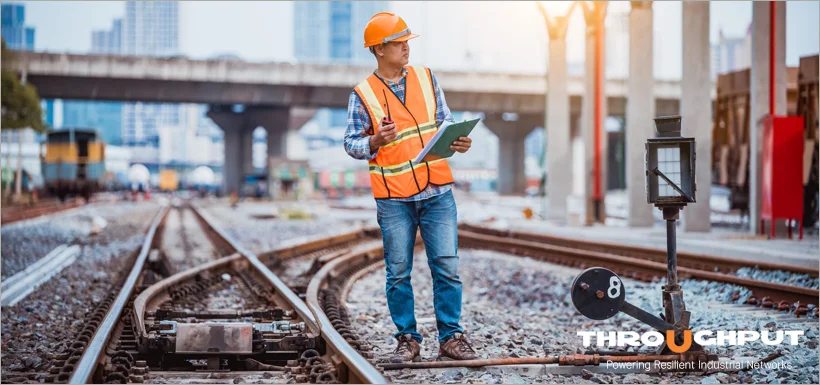
Commodity serial converters provide connectivity at the cost of security, creating invisible backdoors into your control network that attackers actively exploit.
Across industrial facilities, the push to connect legacy serial devices to modern Ethernet networks has created a dangerous dependency on inexpensive, unsecured conversion devices. These commodity converters - often purchased for their low cost and simple setup - lack basic security features, running with default credentials, unencrypted communications, and no access controls. What begins as a practical solution for connecting a decades-old PLC to a new SCADA system becomes a perfect pivot point for attackers moving from corporate networks into critical control systems. The very bridge enabling digital transformation becomes the vulnerability that could undermine it entirely, creating a false sense of connectivity while exposing your most critical operations to unnecessary risk.
Initial cost savings evaporate when unsecured converters lead to security incidents, production downtime, and emergency replacement projects.
While commodity serial converters appear attractive from a capital expenditure perspective, their total cost of ownership often far exceeds industrial-grade solutions. The absence of security features means these devices require additional protective measures - firewalls, network segmentation, and monitoring systems - to achieve basic security levels. More significantly, their higher failure rates in industrial environments lead to unexpected downtime and maintenance costs. Industrial converters from manufacturers like Westermo are designed for continuous operation in challenging conditions, with mean time between failures measured in decades rather than years. This reliability translates to lower total cost of ownership despite higher initial investment, particularly when production losses from communication failures are factored into the equation.
True industrial converters offer integrated security features that transform vulnerable bridges into fortified gateways with comprehensive protection capabilities.
Unlike their commercial counterparts, purpose-built industrial serial-to-Ethernet devices from manufacturers like Westermo incorporate sophisticated security capabilities directly into their design. The WeOS operating system, found across Westermo's product range, provides built-in firewall functionality, VLAN support, and secure management interfaces that eliminate the risk of default credentials. These aren't simple protocol translators - they're intelligent network devices that understand industrial protocols while providing enterprise-grade security features. This approach ensures that the connection point between legacy serial networks and modern IP infrastructure doesn't become the weak link in your security chain, but rather a managed enforcement point where security policies are consistently applied.
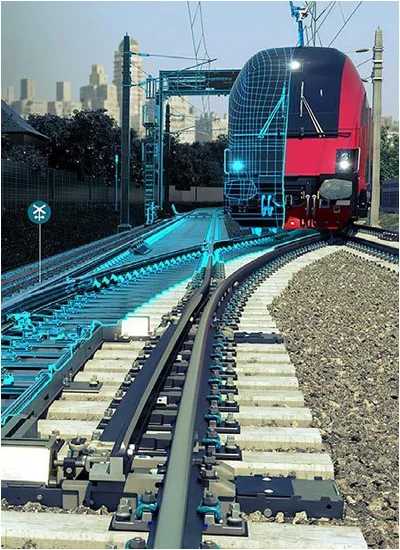
Simple protocol tunneling risks data corruption and misinterpretation; intelligent conversion preserves semantic meaning and operational context.
Basic serial-to-Ethernet devices often provide little more than protocol tunneling, passing raw serial data through TCP wrappers without understanding the content. This approach risks data integrity issues when register scaling, data types, or byte ordering differs between systems. Advanced protocol conversion gateways from suppliers like ProSoft perform deep protocol analysis and translation, ensuring that data meaning is preserved during conversion. Whether translating Modbus RTU to EtherNet/IP or DF1 to OPC UA, these systems handle the complex mapping of data points, scaling factors, and data types that simple converters cannot address. This semantic integrity is essential for control systems where a misinterpreted register value could have serious operational consequences, from quality issues to safety incidents.
Centralized management platforms transform individual conversion points into a cohesive security architecture with consistent policy enforcement.
Standalone converters create management overhead and consistency challenges, particularly in large deployments where dozens or hundreds of devices may be scattered throughout a facility. Managed conversion solutions from suppliers like ATOP provide centralized management platforms that enable consistent security policy enforcement across all devices. These systems allow administrators to push configuration updates, monitor device status, and maintain firmware versions from a single interface. This centralized approach ensures that security settings remain consistent even as devices are added or replaced, eliminating the configuration drift that often undermines security in distributed industrial networks. The ability to quickly identify and update vulnerable devices significantly reduces the organization's attack surface.
TLS encryption ensures that sensitive serial communications remain confidential and tamper-proof when traversing untrusted network segments.
The conversion from serial to Ethernet often means that previously isolated communications now traverse shared network infrastructure. Without encryption, these communications - including sensitive process values, control commands, and configuration data - can be intercepted and analyzed by unauthorized parties. Industrial converters supporting Transport Layer Security (TLS) provide end-to-end encryption for serial data, ensuring confidentiality even when communications cross network boundaries. This encryption capability is particularly important for remote applications where serial data may travel over wireless links or shared wide-area networks where eavesdropping risks are significantly higher. Modern industrial gateways implement hardware-accelerated encryption to maintain performance while providing this essential protection.

VLAN capabilities create logical security boundaries that contain serial devices within protected zones, limiting attack propagation.
The integration of serial devices into Ethernet networks creates new pathways for potential attack propagation. Without proper segmentation, a compromised serial device could provide attackers with access to critical control systems. Industrial converters with VLAN support enable the creation of logical network segments that isolate serial communications within appropriate security zones. This segmentation ensures that even if a serial device is compromised, the attack cannot easily spread to other network areas. When combined with industrial firewalls, this approach creates defense-in-depth that protects both legacy serial assets and modern control systems from cross-contamination. Proper segmentation also simplifies network management and troubleshooting by creating clear communication boundaries.
Industrial-grade construction maintains operation through environmental challenges that would quickly disable commercial conversion equipment.
The environmental demands of industrial settings - temperature extremes, vibration, electrical noise, and humidity - quickly defeat commercial-grade conversion equipment. Purpose-built industrial converters feature ruggedized designs with wide operating temperature ranges, robust power supplies, and enhanced EMI protection that ensure reliable operation in challenging conditions. This reliability is essential for critical applications where communication failures could result in production losses, safety incidents, or environmental releases. The slightly higher initial cost of industrial-grade equipment is quickly justified by reduced downtime and maintenance requirements. In many cases, the cost of a single production interruption exceeds the total investment in proper industrial conversion infrastructure.
Consistent management interfaces reduce configuration errors and streamline security updates across diverse device deployments.
When conversion devices come from multiple manufacturers with different management interfaces, maintaining consistent security configurations becomes challenging. Standardizing on platforms with unified management systems, such as Westermo's WeOS-based products, simplifies security maintenance by providing consistent configuration interfaces across different device types. This consistency reduces the likelihood of configuration errors that could create security gaps while making it easier to implement security updates and policy changes across the entire installed base. The operational efficiency gains from unified management often outweigh the initial cost savings of mixing different device types, particularly when considering the reduced training requirements and troubleshooting time.
Regular firmware updates address emerging vulnerabilities and add new capabilities throughout the device lifecycle.
Unlike disposable commercial converters that rarely receive firmware updates, industrial-grade devices from established manufacturers benefit from ongoing firmware development that addresses security vulnerabilities and adds new features. This ongoing support ensures that conversion infrastructure can adapt to evolving security requirements and protocol standards without requiring hardware replacement. The ability to update firmware also enables organizations to respond quickly to newly discovered vulnerabilities, reducing the window of exposure compared to devices that cannot be updated or patched. This future-proofing extends the usable life of conversion infrastructure, providing better return on investment while maintaining security posture as threats evolve.
Detailed logging and audit trails demonstrate due diligence and support regulatory compliance requirements.
Industrial security standards and regulations increasingly require demonstrated control over all network-connected devices, including serial conversion infrastructure. Industrial gateways provide comprehensive logging capabilities that track configuration changes, communication statistics, and security events. These audit trails not only support troubleshooting and incident investigation but also provide evidence of due diligence for compliance with standards like IEC 62443 and NIST frameworks. The ability to demonstrate consistent security controls across all conversion points simplifies audit processes and reduces compliance risks, particularly in regulated industries where documentation requirements are stringent.
Industrial converters feature ruggedized hardware for harsh environments, integrated security features like firewalls and VLAN support, managed capabilities for centralized control, and ongoing firmware support. Commercial adapters typically lack these features, focusing only on basic protocol conversion without security considerations. Industrial devices also undergo rigorous testing for reliability in extreme conditions and offer much longer service life with proper mean-time-between-failure ratings.
Advanced gateways from suppliers like ProSoft can typically handle multiple protocol conversions simultaneously, allowing different serial devices using protocols like Modbus RTU, DF1, and PROFIBUS to communicate with various Ethernet-based systems concurrently. This capability simplifies network architecture by reducing the number of devices required. Many gateways support protocol translation between different serial protocols as well, enabling communication between devices that wouldn't normally be compatible without additional hardware or software.
Modern industrial converters use hardware-accelerated encryption that has minimal impact on performance, typically adding less than 1ms of latency. For most industrial applications, this is negligible compared to the security benefits. However, for extremely time-sensitive applications, careful testing should validate performance meets requirements. Many gateways allow selective encryption enabling, allowing operators to apply encryption only to sensitive communications while maintaining maximum performance for critical control loops.
A phased approach during planned maintenance windows allows for careful testing and validation. Begin with the most critical connections where security risks are highest, ensuring proper configuration before cutting over. Document existing settings thoroughly to ensure a smooth transition without communication interruptions. Many organizations create a parallel test environment to validate new gateway configurations before deployment, minimizing production risks during the migration process.
Yes, industrial converters typically support standard management protocols like SNMP, syslog, and REST APIs that enable integration with existing network management and security information systems. This allows for centralized monitoring and alerting as part of a comprehensive security strategy. Many also support NETCONF/YANG data models for more advanced automation and integration with software-defined networking architectures, providing flexibility for future network evolution.
Suppliers like ProSoft specialize in protocol conversion for obscure or proprietary protocols. Their extensive protocol libraries often include support for legacy systems, and many offer custom development services for truly unique protocol requirements that aren't covered by standard offerings. Some gateway platforms also support user-programmable logic that allows engineers to implement custom protocol handling when standard solutions aren't available, providing flexibility for unique legacy systems.
Fibre optic connections provide electrical isolation that prevents many physical layer attacks, eliminate EMI susceptibility that can cause communication errors, and cannot be tapped without physical detection. When combined with secure gateways, fibre creates a robust physical and logical security foundation. Fibre also enables much longer distance connections between devices without signal degradation, allowing for more flexible network architecture while maintaining security. The complete electrical isolation provided by fibre also prevents ground loop issues that can damage equipment and cause intermittent communication problems.
The transition from basic serial converters to secure industrial gateways represents a fundamental shift in how organizations approach legacy device integration. Rather than viewing serial connectivity as a necessary risk, secure gatewaying transforms these connection points into managed, monitored, and protected assets that support rather than undermine overall security posture. This approach recognizes that the bridge between legacy and modern infrastructure shouldn't be the weakest point in the network—it should be a strategically managed control point where security policies are consistently enforced.
When properly implemented, industrial serial-to-Ethernet gateways don't just connect devices—they enforce security boundaries, maintain data integrity, and provide visibility into previously opaque serial communications. This approach ensures that digital transformation initiatives can proceed without creating new vulnerabilities that could compromise operational safety and reliability. The investment in proper conversion infrastructure pays dividends through reduced security incidents, lower maintenance costs, and extended service life for critical legacy assets.
Contact a Throughput industrial networking specialist for a gateway security assessment and receive our Secure Serial Conversion Framework.
Subscribe to the Link & Layer | Smart Learning Hub for immediate access to our "Industrial Gateway Security Guide" with configuration templates and migration checklists.
Don't let your modernization bridges become attack vectors. Build secure connections that protect both legacy and modern assets while enabling your digital transformation journey.
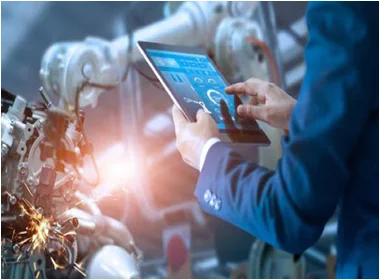
Remote doesn’t mean exposed. Zero-Trust frameworks verify every session, granting only minimal access so serial assets stay secure yet serviceable.

Outdated protocols aren’t obsolete - just unprotected. External security layers wrap legacy communications with encryption, authentication, and integrity verification.
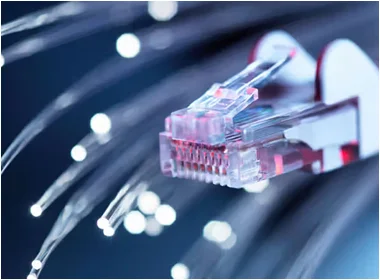
No data is safe if the signal isn’t. Fibre media and isolated hardware eliminate EMI, ensuring commands arrive pure and uncorrupted.