EMI-Resilient Communication & Physical Layer Integrity
No data is safe if the signal isn’t. Fibre media and isolated hardware eliminate EMI, ensuring commands arrive pure and uncorrupted.

Modbus RTU, DF1, and PROFIBUS protocols contain no security mechanisms—they blindly trust every command received. In today's connected environments, this design flaw becomes your most critical vulnerability requiring immediate compensating controls.

Serial industrial protocols operate on implicit trust - any device speaking the language is presumed legitimate, making spoofing and command injection trivial for attackers.
The fundamental architecture of industrial serial protocols represents a cybersecurity nightmare by modern standards. Protocols like Modbus RTU, Allen-Bradley DF1, and PROFIBUS were designed decades ago for isolated networks where physical security provided the only protection. They contain no authentication mechanisms to verify command sources, no encryption to protect data confidentiality, and no integrity checking to prevent manipulation. An attacker who gains network access can send a perfectly formatted "stop" command to a running motor, manipulate critical setpoints, or overwrite safety interlocks with virtually no technical barrier. This inherent vulnerability becomes catastrophic in converged IT/OT environments where serial networks are no longer physically isolated but connected to enterprise systems and, potentially, the internet.
Serial protocols emerged from an era of physical isolation where network security meant locked control room doors and restricted facility access.
Understanding why serial protocols lack security requires examining their origins in the 1970s and 1980s. Modbus, developed in 1979, was designed for simple, reliable communication between programmable logic controllers in factory environments where networks were physically separate from other systems. Similarly, PROFIBUS and DF1 emerged when industrial networks operated in complete isolation from business systems. The concept of a remote attacker accessing these networks was literally inconceivable to the engineers designing these protocols. This historical context explains why these protocols prioritize determinism and reliability over security - they were never intended to operate in interconnected environments where malicious actors could access them remotely. Today's challenge is protecting these fundamentally insecure protocols in a world where connectivity is essential for operational efficiency and business intelligence.
Strategic segmentation using industrial firewalls from Westermo's Lynx and WeOS platform contains serial protocols within protected zones, preventing lateral movement.
Since serial protocols cannot be made secure themselves, the primary defense becomes controlling which devices can communicate with them. Industrial firewalls and switches from manufacturers like Westermo, particularly their Lynx series with WeOS operating system, enable the creation of secure zones that isolate serial devices from unnecessary network exposure. By implementing VLAN segmentation and protocol-aware firewalling, organizations can ensure that only authorized engineering workstations and HMIs can communicate with sensitive serial devices. The WeOS platform provides deep packet inspection capabilities that understand industrial protocols, allowing for granular control based on specific function codes, register addresses, or even data values. This approach follows IEC 62443 principles by creating security zones and conduits that contain the inherent risks of insecure serial protocols. Proper segmentation ensures that even if attackers breach one part of the network, they cannot easily pivot to critical serial control systems.
ATOP's SE/SG series converters with TLS encryption provide confidential serial communications even across untrusted network segments.
When serial communications must traverse shared or untrusted network infrastructure, encryption becomes essential to prevent eavesdropping and manipulation. Serial-to-Ethernet converters from manufacturers like ATOP, specifically their SE and SG series with TLS/SSL capabilities, provide hardware-accelerated encryption that protects serial data without impacting performance. These devices can establish secure tunnels between serial devices and control systems, ensuring that commands and process data remain confidential and tamper-proof. The encryption happens transparently at the gateway level, requiring no changes to legacy serial devices that lack cryptographic capabilities. This approach is particularly valuable for remote applications where serial communications travel over wireless links, WAN connections, or shared network infrastructure where interception risks are significant. The encryption not only prevents eavesdropping but also ensures data integrity by making manipulation detectable through decryption failures.

Secomea's SiteManager and GateManager platforms provide zero-trust session security with full command logging and multi-factor authentication.
Remote access to serial devices represents one of the highest-risk scenarios for insecure protocols, as it extends the attack surface beyond physical boundaries. Zero-trust remote access solutions from manufacturers like Secomea, particularly their SiteManager gateways and GateManager cloud platform, provide comprehensive session security that compensates for protocol deficiencies. These systems enforce multi-factor authentication before granting access, maintain detailed logs of all commands sent during remote sessions, and can even record entire sessions for forensic analysis. The platform's ability to restrict access to specific serial ports and protocols ensures that remote users can only interact with authorized devices, preventing accidental or malicious access to critical systems. This session-level security provides accountability and control that the underlying serial protocols fundamentally lack. The systems also provide time-bound access, ensuring that temporary maintenance access doesn't become a permanent vulnerability.
Protocol-aware firewalls in Westermo's WeOS platform can detect and block malicious command sequences targeting known serial protocol vulnerabilities.
Many serial protocol implementations contain specific vulnerabilities that attackers can exploit to cause denial of service, unauthorized access, or control manipulation. While the legacy devices using these protocols cannot be patched, industrial firewalls can provide virtual patching by intercepting and blocking malicious traffic. The Westermo WeOS platform includes intrusion prevention capabilities that can detect known attack patterns targeting Modbus, PROFIBUS, and other serial protocols. These systems can identify and block malformed packets, unauthorized function codes, suspicious register access patterns, and other indicators of attack. This virtual patching approach allows organizations to protect vulnerable legacy devices without requiring firmware updates or hardware replacement, effectively extending the security lifecycle of critical industrial assets. The systems can be updated with new attack signatures as threats evolve, providing ongoing protection without modifying the underlying serial devices.
ATOP's iRMS management platform provides behavioral monitoring that establishes normal serial communication patterns and flags deviations.
Since serial protocols lack built-in security indicators, detecting compromise requires monitoring communication patterns for anomalous behavior. Management platforms like ATOP's iRMS (Industrial Remote Management System) can analyze serial traffic converted to Ethernet to establish baselines of normal operation. These systems learn typical poll-response intervals, normal command sequences, expected register value ranges, and standard communication partners. When deviations from these baselines occur—such as commands from unexpected sources, unusual timing patterns, or abnormal data values—the system generates alerts for investigation. This behavioral monitoring approach can detect attacks that use legitimate protocol commands in malicious ways, something signature-based detection systems often miss. The platform can integrate with existing SIEM systems to provide comprehensive security visibility across both serial and Ethernet networks. The monitoring can also detect equipment degradation by identifying changes in communication patterns that may indicate impending failures.
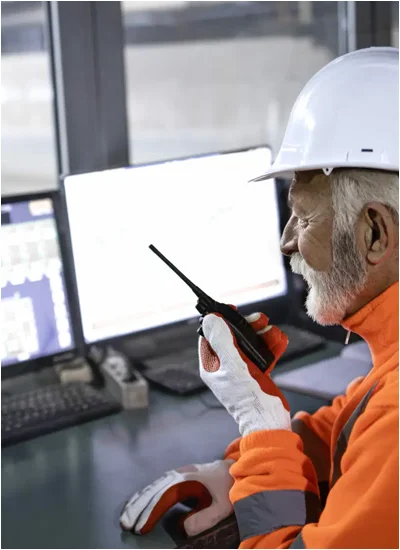
Comprehensive security architectures using multiple compensating controls demonstrate due diligence for regulatory compliance requirements.
Industrial security standards like IEC 62443 recognize that legacy systems cannot always meet modern security requirements directly. The standard allows for compensating controls that provide equivalent protection through alternative means. A layered security approach combining Westermo's segmentation capabilities, ATOP's encrypted tunneling, and Secomea's session security creates a comprehensive defense-in-depth strategy that compensates for the inherent weaknesses of serial protocols. This multi-layered approach can be documented and audited to demonstrate compliance with regulatory requirements, even when the underlying devices lack modern security features. The key is implementing controls that address the specific risks associated with serial protocols - spoofing, eavesdropping, and manipulation - through network architecture rather than device-level security. Proper documentation of these controls, including risk assessments and implementation details, provides evidence of due diligence during audits.
Granular security policies tailored to specific serial protocols provide more effective protection than generic network rules.
Different serial protocols have unique characteristics and vulnerabilities that require specific security considerations. Modbus RTU's master-slave architecture needs policies that restrict which devices can act as masters, while PROFIBUS networks may require protection against token manipulation attacks. Industrial security devices with protocol awareness can implement these protocol-specific policies. For example, a firewall might permit read operations from HMIs to controllers while restricting write operations to specific registers from authorized engineering stations. This granular control ensures that security measures don't disrupt legitimate operations while providing protection against the most likely attack vectors for each protocol type. The policy development process should involve operational staff to ensure that security controls align with operational requirements. Regular reviews of these policies ensure they remain effective as network configurations and threats evolve.
Fibre optic serial converters from ATOP's product range provide electrical isolation that prevents many physical layer attacks.
Many attacks against serial networks exploit physical layer vulnerabilities, including tapping copper cables, injecting signals through induction, or manipulating grounding. Fibre optic serial converters from manufacturers like ATOP provide complete electrical isolation between devices, eliminating these physical layer attack vectors. Fibre optic cables cannot be tapped without physical access and detection, are immune to electromagnetic interference, and prevent ground loop issues that can cause communication problems. Deploying fibre for critical serial links, particularly between buildings or across large facilities, provides both reliability and security benefits. This physical layer security complements the logical security measures applied at higher layers, creating a comprehensive protection strategy. The use of fibre also future-proofs installations by providing greater bandwidth for potential future upgrades while maintaining security.
Ongoing security maintenance ensures that compensating controls remain effective as threats evolve.
Protecting insecure serial protocols is not a one-time effort but requires ongoing maintenance and adaptation. Security policies must be reviewed regularly to ensure they remain effective against evolving threats. Firmware for security devices like firewalls and converters must be kept current to address newly discovered vulnerabilities. Monitoring systems need tuning to reduce false positives while maintaining detection sensitivity. This ongoing security lifecycle management ensures that the compensating controls protecting serial protocols remain effective over time. Organizations should establish regular review cycles for serial protocol security, involving both cybersecurity and operational technology staff to balance security requirements with operational needs. Documentation of security measures, including network diagrams, policy configurations, and monitoring procedures, ensures consistency and facilitates knowledge transfer as staff changes occur.
A phased approach minimizes disruption while progressively improving security posture in existing installations.
Implementing comprehensive security for serial protocols in existing facilities requires careful planning to avoid operational disruption. A phased approach typically begins with asset inventory and network documentation to understand current communication patterns and dependencies. The next phase involves implementing basic segmentation to create security zones, followed by deployment of encrypted tunneling for communications crossing zone boundaries. Remote access security can be implemented next, followed by advanced monitoring and virtual patching capabilities. Each phase should include thorough testing to validate that security measures don't impact operational requirements. This incremental approach allows organizations to demonstrate progress while managing risk and maintaining operational stability throughout the implementation process.
Properly implemented security measures have minimal impact on performance. Industrial-grade security devices like Westermo's Lynx series with WeOS are designed to process traffic at wire speed with microsecond-level latency. Encryption in ATOP's SE/SG series uses hardware acceleration to maintain performance. The key is proper architecture - placing security controls at zone boundaries rather than between tightly coupled devices. For most industrial applications, the performance impact is negligible compared to the security benefits, and any minor latency is far preferable to the consequences of a successful attack. Extensive testing in operational environments has demonstrated that well-designed security implementations have no measurable impact on control system performance for the vast majority of industrial applications.
Proprietary protocols can be secured using the same principles as standard protocols. Westermo's WeOS platform can implement basic filtering based on observed traffic patterns, even without deep protocol understanding. ATOP's encrypted tunneling provides confidentiality regardless of the underlying protocol. For more advanced protection, protocol analysis tools can reverse-engineer communication patterns to establish behavioral baselines. In some cases, protocol conversion gateways from manufacturers like ProSoft can translate proprietary protocols to more standard ones that are easier to secure. The fundamental security controls - segmentation, encryption, and access control - apply regardless of the specific protocol implementation. Behavioral monitoring can be particularly effective for proprietary protocols, as it focuses on communication patterns rather than specific protocol knowledge.
Begin with comprehensive documentation and network segmentation. Identify all serial devices, their communication requirements, and their criticality. Then implement basic segmentation using VLANs on industrial switches like Westermo's Lynx series to isolate serial traffic from other networks. Next, deploy encrypted tunneling for any serial communications traversing untrusted networks using ATOP's SE/SG converters. Finally, implement access controls for remote access using Secomea's SiteManager platforms. This phased approach allows for incremental security improvements while maintaining operational stability. Starting with segmentation provides immediate risk reduction while more advanced controls are planned and implemented. Many organizations begin with a pilot project in a non-critical area to validate approaches before broader deployment.
The layered approach described aligns directly with IEC 62443 principles. Network segmentation using Westermo's WeOS platform implements security zones and conduits (SR 3.1). Encrypted tunneling with ATOP's converters provides data confidentiality (SR 3.3). Access control through Secomea's solutions ensures identification and authentication control (SR 3.4). Monitoring and detection capabilities support security monitoring (SR 3.11). Together, these compensating controls demonstrate a systematic approach to securing systems that cannot meet all security requirements directly, which is explicitly allowed within the IEC 62443 framework. Proper documentation of risk assessments, security policies, and implementation details provides the evidence needed for successful audits and certification.
Yes, with proper planning and phased implementation. Begin with passive monitoring to understand normal traffic patterns using ATOP's iRMS platform. Then implement segmentation during planned maintenance windows, testing thoroughly before enforcement. Encryption can be deployed in monitoring mode initially to validate performance. Remote access security through Secomea's platforms can run parallel to existing methods during transition. The key is thorough testing at each stage and maintaining rollback capabilities. Most organizations complete the transition without significant operational disruption by following a methodical, well-planned approach. Involving operational staff throughout the process ensures that security measures align with operational requirements and that potential impacts are identified and mitigated early.
Broadcast and multicast protocols require special consideration but can still be secured. Westermo's WeOS platform supports multicast filtering and can restrict broadcast domains to appropriate segments. For critical systems, consider converting multicast to unicast communications where possible. Monitoring systems like ATOP's iRMS need specific configuration to properly handle multicast traffic analysis. In some cases, protocol conversion gateways can transform multicast protocols to more securable communication patterns. The fundamental principles still apply - limit communication to authorized parties, protect data confidentiality, and monitor for anomalies. Careful network design can minimize the need for broadcast communications while maintaining operational functionality.
For extremely latency-sensitive applications, security measures can be implemented at architectural boundaries rather than between tightly coupled devices. Place segmentation controls between different functional areas rather than within control loops. Use hardware-accelerated encryption like that in ATOP's SE/SG series to minimize latency impact. For the most critical real-time systems, physical separation through fibre optic links provides security without adding processing latency. In all cases, thorough testing should validate that security measures don't impact operational requirements. The minimal latency added by proper security controls is typically far less significant than the latency variations introduced by normal network operation. Many organizations find that perceived latency concerns are greater than actual measured impacts.
The security challenges posed by inherently insecure serial protocols cannot be eliminated, but they can be effectively managed through comprehensive compensating controls. By implementing layered security measures that address the specific weaknesses of these protocols, organizations can protect critical industrial assets without requiring replacement of legacy equipment. The combination of network segmentation, encrypted communications, session security, and continuous monitoring creates a defense-in-depth strategy that compensates for the protocol deficiencies. This approach acknowledges the reality that many critical industrial systems will continue using these protocols for years to come, while providing the protection needed in today's connected environments.
This approach transforms serial protocol security from an unsolvable problem into a manageable risk. Rather than hoping that air gaps will provide protection in increasingly connected environments, organizations can implement proactive security measures that allow legacy systems to operate safely alongside modern infrastructure. The result is extended service life for critical assets, maintained operational reliability, and demonstrated compliance with security standards - all while protecting against the very real threats targeting industrial control systems. The investment in proper security controls pays dividends through reduced risk, improved visibility, and maintained business continuity.
Contact a Throughput security specialist for a serial protocol assessment and receive our IEC 62443 Compensating Controls Framework.
Subscribe to the Link & Layer | Smart Learning Hub for immediate access to our "Serial Protocol Security Guide" with configuration templates and compliance checklists.
Don't let inherent protocol weaknesses become your downfall. Implement layered security that protects your legacy investments while enabling secure operations.
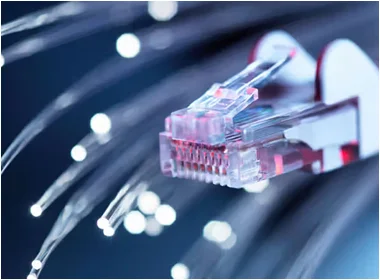
No data is safe if the signal isn’t. Fibre media and isolated hardware eliminate EMI, ensuring commands arrive pure and uncorrupted.

AI sees what alarms can’t. By learning normal behavior, it detects subtle deviations early - turning reactive maintenance into predictive control.

In automation, timing is everything. Deterministic networks ensure sub-millisecond precision so control loops stay synchronized, stable, and safe.