Deterministic Timing & Control Loop Integrity
In automation, timing is everything. Deterministic networks ensure sub-millisecond precision so control loops stay synchronized, stable, and safe.

The subtle patterns in your serial communications contain early warnings of equipment failures and security breaches that human operators cannot detect. AI-powered analytics transforms this hidden intelligence into actionable foresight.

Human operators notice when communications fail completely, but AI detects the subtle degradation patterns that precede catastrophic failure by days or weeks.
Industrial serial communications follow predictable patterns that human monitoring cannot comprehensively track. The timing between poll-response cycles, the distribution of CRC errors, the sequence of command execution, and even the subtle variations in signal quality all contain valuable diagnostic information. Traditional monitoring systems trigger alerts only when thresholds are breached, missing the gradual changes that indicate developing problems. AI-powered analytics processes these patterns continuously, learning what 'normal' looks like for each device and communication path. When deviations occur - even subtle ones that wouldn't trigger conventional alarms - the system recognizes them as potential early warnings of equipment degradation, configuration drift, or security compromise. This proactive approach transforms maintenance from reactive firefighting to strategic prevention.
Welotec's rugged edge computing systems run AI analytics locally, providing real-time insights without cloud dependency or bandwidth constraints.
Cloud-based analytics introduce latency and dependency that undermine real-time industrial operations. Edge AI platforms from manufacturers like Welotec, particularly their industrial edge servers with GPU acceleration and Docker container support, process serial communication data directly at the source. These systems analyze traffic patterns, device behavior, and communication statistics without sending sensitive operational data to the cloud. The edge approach ensures that analytics continue functioning during network outages and maintains data sovereignty for organizations with strict data governance requirements. Welotec's platforms can host multiple AI models simultaneously, allowing different analytics applications to run on the same hardware while maintaining complete isolation and performance guarantees for critical monitoring functions.
ATOP's next-generation converters include built-in analytics that detect anomalies at the conversion point itself.
While edge platforms provide centralized analytics, some detection needs to happen at the communication boundary itself. Smart serial-to-Ethernet converters from manufacturers like ATOP, specifically their iRMS-enabled gateways with local processing capability, incorporate basic anomaly detection directly into the conversion hardware. These devices monitor communication health metrics like retry rates, timeout frequencies, and signal quality indicators, flagging deviations without requiring external processing. The gateways can detect patterns indicating specific failure modes - gradually increasing CRC errors suggesting cable degradation, timing variations indicating device performance issues, or unusual command sequences that might signal security events. This distributed intelligence approach provides immediate local detection while feeding richer data to centralized edge analytics platforms for deeper correlation and analysis.
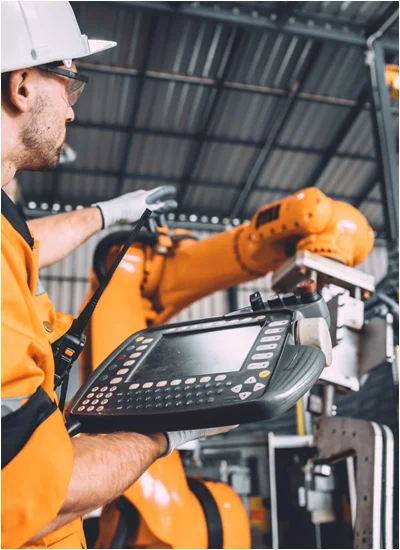
Westermo's WeOS platform exports rich telemetry to security information systems, enabling correlation across IT and OT boundaries.
Serial communication anomalies often relate to broader system issues that span both operational and information technology domains. Industrial networking equipment from manufacturers like Westermo, particularly their WeOS-based switches and routers with comprehensive syslog and SNMP support, exports detailed communication metrics to Security Information and Event Management (SIEM) systems. This integration enables correlation between serial communication patterns and other security events - detecting, for example, that unusual serial command sequences coincide with suspicious login attempts from the corporate network. The WeOS platform provides structured data exports that include timing information, error statistics, and traffic patterns that SIEM systems can analyze alongside other security telemetry. This cross-domain visibility is essential for detecting sophisticated attacks that might use serial communications as one component of a multi-vector campaign.
Machine learning algorithms automatically establish what 'normal' looks like for each device, eliminating manual threshold configuration.
Traditional monitoring requires engineers to manually set thresholds for alert conditions - a process that's both time-consuming and inherently limited. AI-powered systems automatically learn behavioral baselines by observing normal operations over a training period. Platforms like Welotec's edge AI systems analyze communication patterns to understand each device's unique operational characteristics. They learn typical poll-response intervals, normal command sequences, expected data value ranges, and standard communication partners. This automated baseline establishment adapts to seasonal variations, shift patterns, and production changes without manual intervention. The system becomes more accurate over time as it observes more operational scenarios, continuously refining its understanding of what constitutes normal behavior for each monitored asset.
AI detects equipment degradation patterns days or weeks before traditional monitoring systems identify problems.
The most valuable application of AI analytics is predicting equipment failures before they cause downtime. Subtle changes in communication patterns often precede hardware failures by significant margins. ATOP's smart gateways can detect gradually increasing error rates that indicate deteriorating cables or connectors. Welotec's edge platforms might identify timing variations that suggest motor bearing wear in devices controlled via serial communications. These patterns are often invisible to human operators and traditional monitoring systems because they develop gradually and remain within nominal operating ranges until catastrophic failure occurs. AI systems recognize these trends early, providing maintenance teams with sufficient notice to schedule repairs during planned outages rather than reacting to unexpected failures.

Behavioral analysis identifies attacks that use legitimate commands in malicious ways, defeating signature-based security systems.
Traditional security systems rely on recognizing known attack patterns, making them ineffective against novel attacks or those using legitimate protocol commands maliciously. AI-powered behavioral analysis detects security anomalies based on operational context rather than specific signatures. A system might flag a write command to a critical register as suspicious not because the command itself is malicious, but because it occurs at an unusual time, originates from an unexpected source, or forms part of an unusual command sequence. Westermo's integration with SIEM platforms enables this contextual analysis by correlating serial communication patterns with other security events. This approach is particularly effective against insider threats and sophisticated attacks that carefully avoid triggering traditional security controls while still manipulating system behavior.
AI correlation identifies relationships between seemingly unrelated events, dramatically reducing troubleshooting time.
When communication failures occur, identifying the root cause often involves correlating multiple data points across different systems. AI analytics accelerates this process by automatically identifying relationships between events. A platform might correlate increasing EMI levels detected by ATOP's smart gateways with the activation of specific motor drives, identifying the noise source that's causing communication errors. Or it might link timing variations in serial responses with temperature changes recorded by environmental monitoring systems. This automated correlation transforms troubleshooting from a manual, time-consuming process into a rapid, precise identification of underlying causes. The system can even suggest specific remediation actions based on patterns observed in similar situations across the organization.
Continuous learning ensures detection accuracy as systems change and new patterns emerge.
Industrial systems evolve over time - new equipment is added, processes change, and operational requirements shift. Static monitoring systems quickly become inaccurate as these changes accumulate. AI-powered analytics continuously adapt to evolving conditions, automatically updating behavioral baselines as systems change. Welotec's edge platforms can detect when operational patterns have permanently shifted and initiate relearning cycles without manual intervention. This adaptive capability ensures that anomaly detection remains accurate throughout the system lifecycle, avoiding the false alerts that plague static monitoring systems after process changes or equipment upgrades. The systems can even detect when their own detection accuracy is degrading and flag the need for model retraining or parameter adjustment.
Most systems require 2-4 weeks of operational data to establish reliable baselines, though they begin providing value within days. The training period should encompass complete operational cycles including production variations, maintenance activities, and different shift patterns. Welotec's edge platforms use transfer learning techniques that can accelerate this process by leveraging patterns learned from similar systems. The systems continue refining their models indefinitely, becoming increasingly accurate as they observe more operational scenarios and rare events. This continuous learning ensures that the AI adapts to seasonal changes, equipment aging, and process modifications without manual recalibration.
Advanced systems can often distinguish between failure patterns and attack signatures based on behavioral characteristics. Equipment failures typically show gradual degradation patterns—slowly increasing error rates, progressive timing changes, or deteriorating signal quality. Cyber attacks often manifest as abrupt behavioral changes, unusual command sequences, or activities that contradict operational context. ATOP's smart gateways combined with Welotec's edge analytics can correlate multiple indicators to determine the most likely cause. The system might identify that unusual commands coinciding with network scanning activity suggest a security incident, while the same commands accompanied by equipment performance degradation might indicate a control system issue.
Systems operate in a hybrid mode during the learning period, combining traditional rule-based detection with emerging AI capabilities. ATOP's gateways provide immediate protection using conventional rules while the AI learns behavioral patterns. Westermo's devices continue enforcing existing security policies. The AI system typically begins with conservative detection thresholds that become more refined as learning progresses. Most organizations maintain their existing monitoring systems during the transition period, gradually shifting reliance to AI detection as confidence grows. This phased approach ensures continuous protection while the AI system develops its understanding of normal operations.
Validation involves running the AI system in parallel with existing monitoring while manually reviewing alerts. Welotec's platforms include comprehensive reporting that shows detection accuracy, false positive rates, and alert justification. Organizations typically conduct controlled tests - introducing known issues to verify detection—before relying on the system for operational decisions. The platforms provide confidence scores for each detection, allowing operators to understand how certain the AI is about each alert. Most systems reach reliable operation within 1-2 months, though they continue improving indefinitely as they encounter more scenarios.
Modern industrial AI platforms are designed for operational technology staff rather than data scientists. Welotec's systems provide intuitive interfaces for reviewing alerts, adjusting sensitivity, and managing exceptions. The underlying AI models self-tune based on feedback from operators - when an alert is confirmed or dismissed, the system learns from that feedback. Advanced configuration is available for specialized requirements, but day-to-day operation requires the same industrial automation skills needed for traditional control systems. The platforms include automated model management that handles retraining, version control, and performance monitoring without manual intervention.
Yes—edge AI platforms from Welotec are designed for complete offline operation. All processing occurs locally on the industrial edge hardware, with no cloud dependency for core detection capabilities. The systems can operate indefinitely without internet connectivity, making them suitable for secure or remote locations. Internet connectivity is only required for initial setup, software updates, and optional cloud integration for centralized reporting. This edge-native architecture ensures that critical detection capabilities continue functioning during network outages or security incidents that might disrupt cloud services.
The systems use multiple techniques to minimize false positives while maintaining detection sensitivity. Confidence scoring allows operators to prioritize high-probability alerts while reviewing lower-confidence detections. Feedback mechanisms enable the AI to learn from operator decisions, continuously refining its detection accuracy. Multi-factor detection requires multiple correlated anomalies before triggering high-severity alerts. Westermo's SIEM integration enables correlation with other security events to validate detections. Most organizations establish alert review workflows that balance automated detection with human oversight, particularly during the initial deployment period as the AI system learns the specific characteristics of their environment.
AI-enhanced anomaly detection transforms industrial serial communications from a troubleshooting burden into a strategic intelligence asset. The patterns hidden within communication streams become early warning systems that identify developing problems long before they cause operational impacts. This proactive approach doesn't just reduce downtime—it transforms maintenance from expensive emergency response to planned, efficient activities that minimize disruption and cost.
When you implement AI-powered analytics, you're not just adding another monitoring tool. You're creating a system that learns your operations, understands your equipment, and anticipates your problems. This intelligence becomes increasingly valuable over time as the system observes more scenarios and refines its understanding. The result is operational resilience that grows stronger with each incident prevented and each failure predicted before it occurs.
Contact a Throughput AI analytics specialist for an operational assessment and receive our Predictive Diagnostics Implementation Framework.
Subscribe to the Link & Layer | Smart Learning Hub for immediate access to our "AI Anomaly Detection Guide" with use cases and deployment templates.
Don't wait for failures to reveal what your serial communications could have told you weeks ago. Deploy AI analytics that sees problems coming before they arrive.

In automation, timing is everything. Deterministic networks ensure sub-millisecond precision so control loops stay synchronized, stable, and safe.

Modern industry demands meaning, not just movement. Advanced gateways preserve every engineering value’s integrity - ensuring legacy serial data stays accurate, secure, and trusted.

Remote doesn’t mean exposed. Zero-Trust frameworks verify every session, granting only minimal access so serial assets stay secure yet serviceable.